Understanding Sound Waves
To master your room's acoustics, you must first demystify what sound actually is. In the context of a recording studio, sound is physical energy—a series of mechanical compressions and rarefactions moving through a medium, typically air. When we frame soundproofing and acoustic treatment as an accessible science, we rely on mapping these energy vectors.
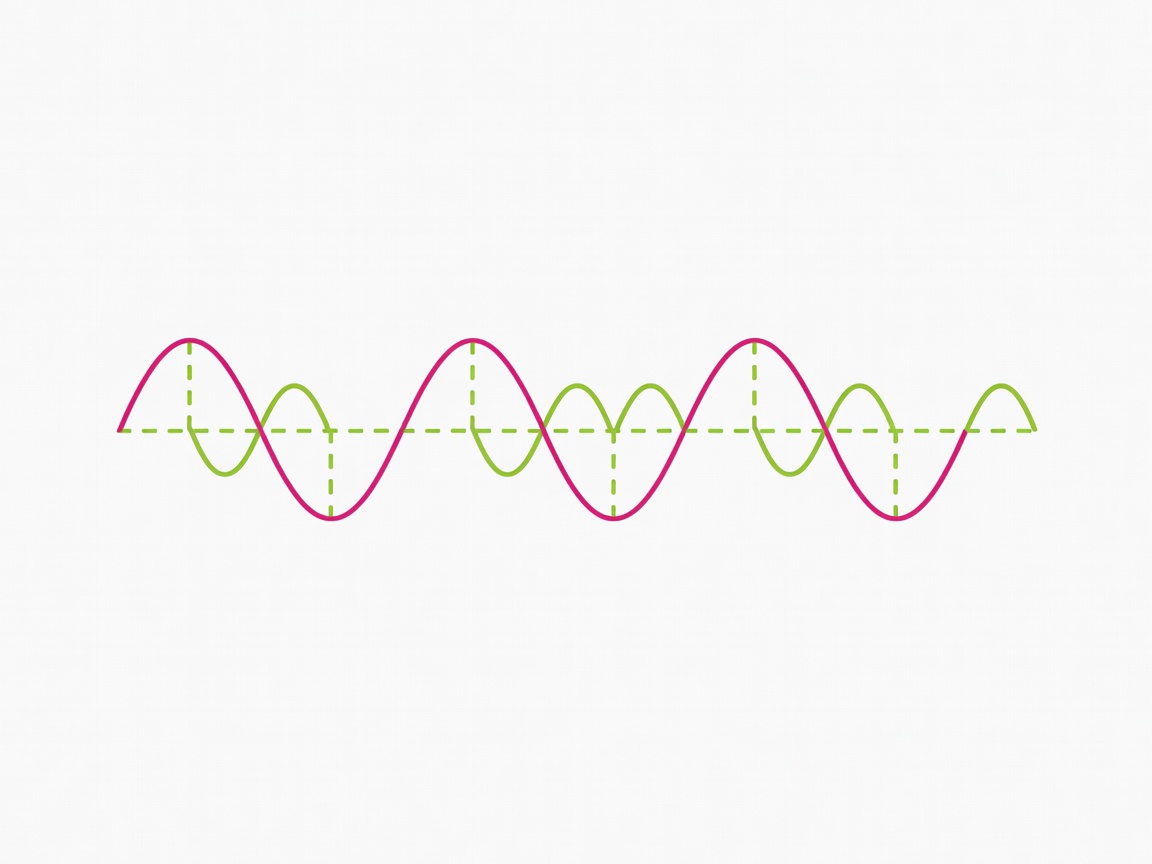
The Anatomy of a Wave
Every sound you record, from a kick drum to a subtle vocal breath, is composed of frequencies. These are measured in Hertz (Hz), which indicates cycles per second.
- Low Frequencies (Bass): Waves between 20Hz and 250Hz. These are physically massive. A 60Hz wave is nearly 19 feet long. This is why bass energy ignores thin foam and builds up aggressively in the corners of your room.
- Mid Frequencies: Waves between 250Hz and 4kHz. This is where the human voice primarily sits, and where our ears are most sensitive. Muddy mixes usually suffer from untreated reflections in this band.
- High Frequencies: Waves above 4kHz. These are short, highly directional waveforms that are easily absorbed by soft materials like curtains or standard acoustic foam.
The Problem with Untreated Rooms
Imagine turning on a bright flashlight in a room entirely covered in mirrors. The light would bounce chaotically, creating blinding glare and visual confusion. An untreated room does the exact same thing to sound.
Phase Cancellation
When a direct sound wave from your monitor reaches your ear, it is followed milliseconds later by the same sound wave reflecting off your desk or sidewall. Because the reflected wave traveled a longer distance, it arrives slightly delayed. When these two waves combine, they can be out of phase. If the peak of the direct wave meets the trough of the reflected wave, they cancel each other out. This means specific frequencies literally disappear from your listening position, causing you to make terrible mixing decisions.
Flutter Echo
Clap your hands in an empty, square room. That harsh, ringing, metallic sound trailing off is flutter echo. It occurs when high-frequency waves bounce rapidly back and forth between two parallel hard surfaces (like your left and right walls). It ruins acoustic instrument recordings and makes vocal takes sound amateur.
The Vector Approach to Treatment
Acoustic treatment is not about soundproofing (stopping sound from escaping the room). It is about controlling the vectors of reflection inside the room. By calculating the angle of incidence, we can place dense, absorptive materials exactly where the sound wave strikes the wall, converting that kinetic energy into microscopic amounts of heat, preventing it from bouncing back to the listening position.
Absorption vs. Diffusion
A mathematically perfect studio utilizes a combination of two techniques:
Absorption removes acoustic energy from the room. We use rigid fiberglass or mineral wool to "soak up" problematic reflections. This is essential for early reflection points.
Diffusion scatters acoustic energy evenly across a space without removing it. By forcing a wave to strike an uneven, mathematically calculated surface (like a quadratic residue diffuser), the wave breaks into smaller vectors, retaining the "life" and "air" of the room without causing destructive phase cancellation.
By understanding these core scientific principles, you shift from guessing where to glue foam, to engineering a precise acoustic environment.